Now Enrolling!
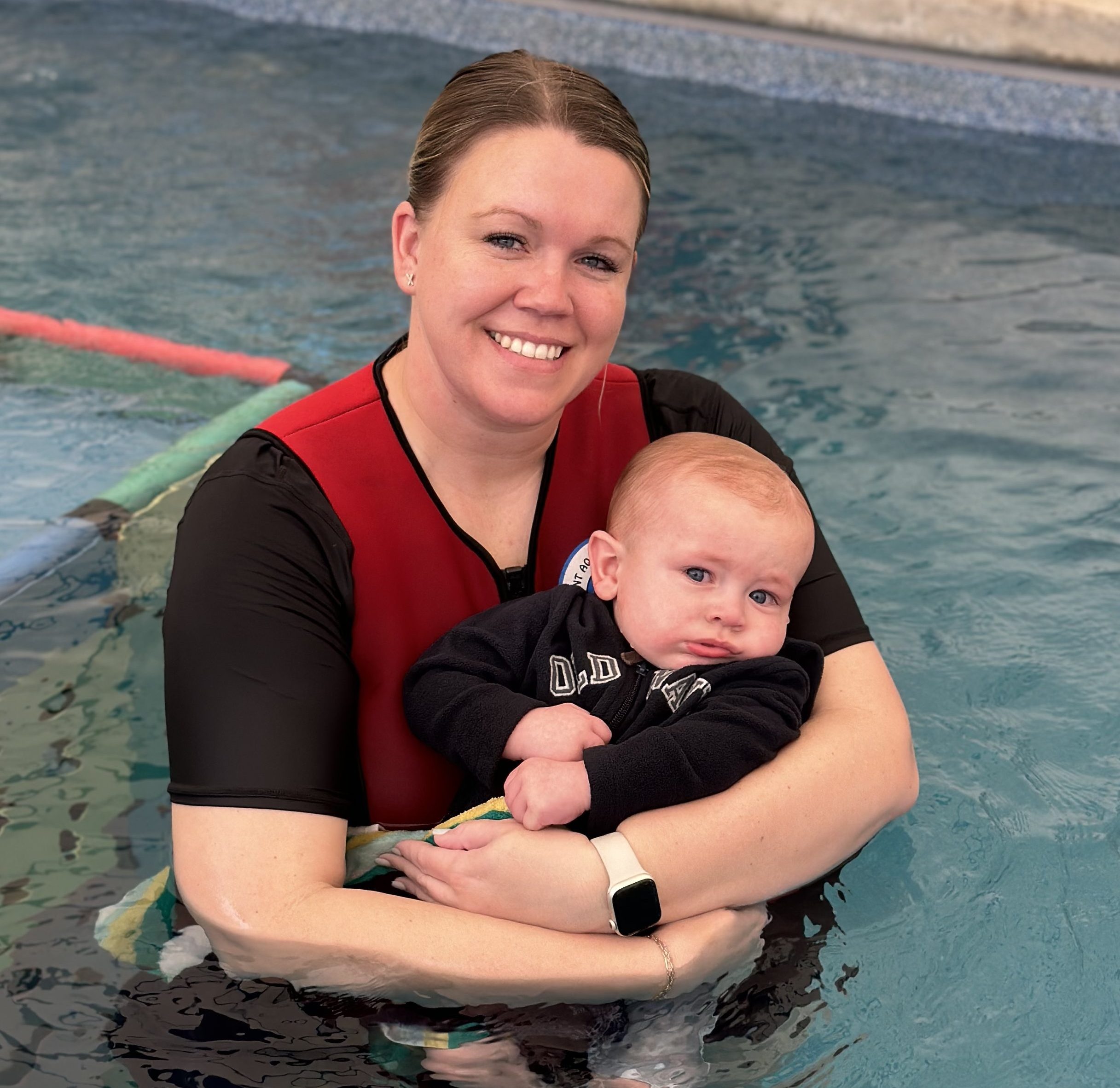
My name is Jenna Hammond. I have been a Certified Occupational Therapy Assistant for the last 10 years. I have a range of work experience in aquatic therapy, geriatrics, pediatrics, and adults with special needs.
- Certified Infant Aquatics Survival Specialist
- Certified Occupational Therapy Assistant
- CPR, AED, First AID
The Infant Aquatics® Mission
Infant Aquatics® is comprised of energetic, creative professionals who love being in the water. We are dedicated to teaching your child the survival swimming skills needed to enjoy the water safely.
Each instructor has over 100 hours of in-water training and education in child development and behavior. Combining our years of experience and educational background with the physics of swimming, we have developed and conduct the safest and most comprehensive baby swimming lessons possible.
IA Instructors take pride in our expertise in working with infants and small children and believe that we are saving lives, one child at a time. We form special relationships with both our students and their parents. Watching your child discover the joy of swimming is truly the most rewarding experience for us all.
Why Infant Aquatics?
Children are naturally drawn to pools, hot tubs, lakes, ponds, streams, reservoirs and beaches. Despite a parent’s best efforts at supervision, it only takes one head turn before an accident has occurred.
It’s not just about being comfortable in the water, it’s being able to swim and survive. Empower your child with the skills needed to safely enjoy the water! Discover the Infant Aquatics Difference today!
What Can Infants Learn?
- Hold their breath in the water.
- Roll from a face-down position to a face up back float.
- Float, relax and breathe until rescued by an adult.
- Perform these skills fully clothed.
Particularly active infants may also learn to propel a short distance through the water between two parents. Learning these skills takes approximately 4-6 weeks.
Children Who Are Walking (15mo -36 mo plus) Can Learn the Skills to:
- Hold their breath in the water.
- Swim with their face in the water to the steps, side, or parent.
- Roll over onto their back when they need to breathe.
- Flip back onto their tummy to continue to swim until reaching their destination, or roll to their back should they need to breathe again.
- Perform these skills fully clothed
This is an intense class series. Swimming is a life long skill with possible drowning consequences if not learns. Many infants to age 5 do not appreciate, realize or understand their potential. I want parents to know that I will push, encourage and love your child during training.
What Makes Us Different?
- Students learn in weeks, not years
- We offer specialized swimming and water safety instruction from learning the skills to roll over and float and/or the skills to swim-float swim.
- Students learn in a private lesson
- Instructors are licensed, certified, trained, and experienced
- Instructors attended annual conferences providing current up to date teaching techniques
Our Teaching Methods
How Are Lessons Structured?
Lessons with Infant Aquatics are one-on-one, approximately 10 minutes in length, M T W TH for 4-6 weeks. Each lesson builds upon the previous day’s lesson, so there is measurable progress each week.
How Can You Teach a Baby Who Cannot Talk?
Swimming and floating are motor skills that can be taught to babies through repetitive exercises, along with gentle verbal encouragement. We show the babies what we want them to do, and over a short period of time, they learn the skills necessary to survive. Be assured, we do not throw children into the water! We use a variety of methods, combining the best ideas from swim schools and infant/toddler programs throughout the world.
What is the Parent’s Role?
We encourage parents of infant and toddlers to be supportive, cheer when the instructor gives parents the cheer cue. On occasion we may have a parent in the water also. Our goal for children of all ages is to establish a relationship of trust between your child and the instructor. Once this occurs, your child will learn to trust him/herself in the water and real progress begins.
Lessons Offered
Little Ham’s Infant Aquatics and Jenna is part of a global network of Infant Aquatic Survival Specialists dedicated to teaching children to survive in the event of a water accidents.
 Little Hams Infant Aquatics